
Why We Let Kids Play With Sticks (And Why You Should Too)
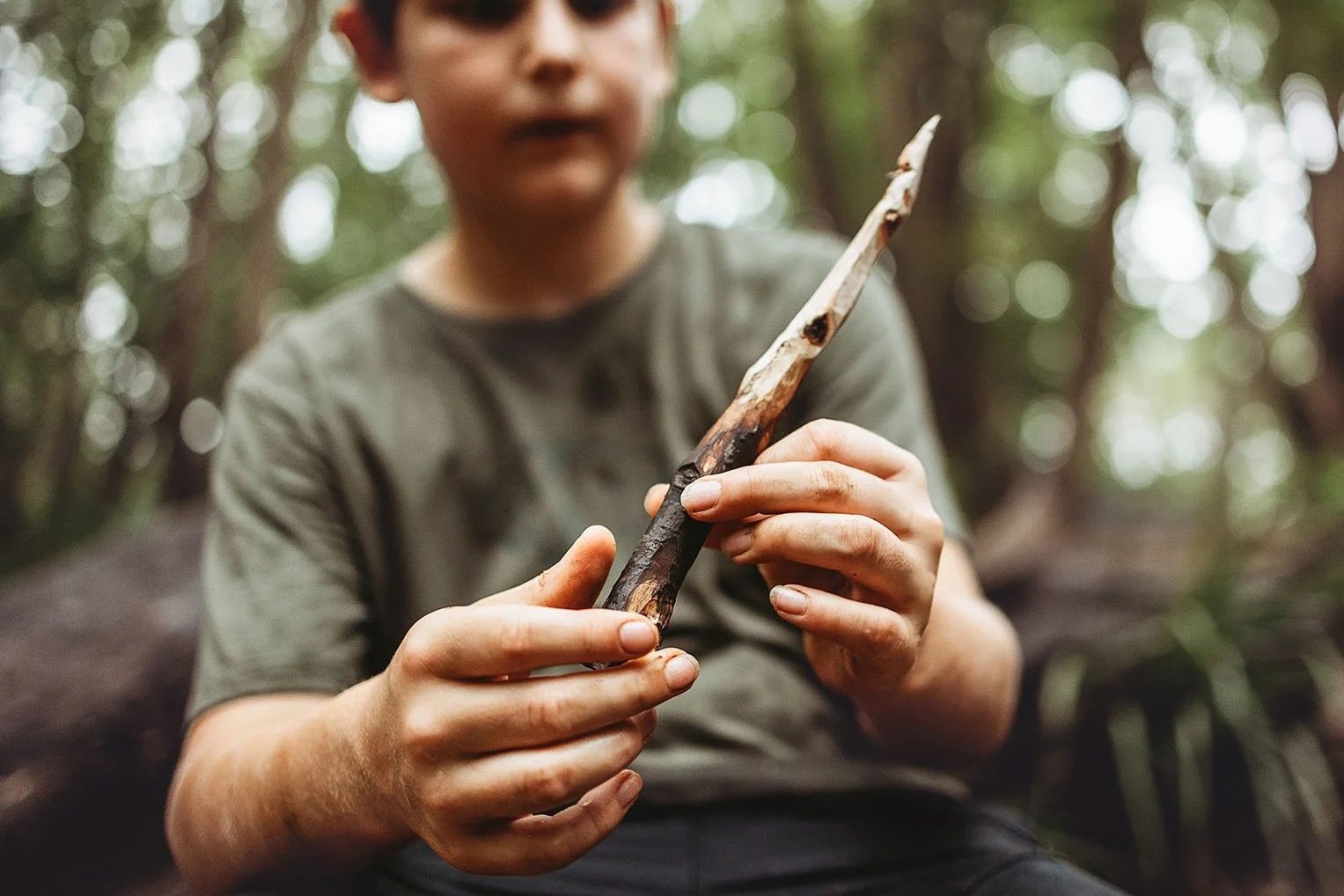
"Just a stick"? Not even close.
To an adult, it's a stick. To a child, it's a wand, a fishing rod, a lightsaber, a digging tool, a fairy house pillar, whatever their imagination needs it to be in that moment.
If you're already exploring nature play with your child, you've probably watched them gravitate toward sticks within seconds of arriving at a park, a beach, or a bush trail.
And you've probably also felt that instinctive flinch: put that down.
This post is for the parents or educators who already believe in the value of outdoor, child-led, risk-aware play, but want practical tools for navigating stick play (and play-fighting) with real confidence, not just good intentions.
Why Stick Play Is a Core Part of Nature Play
At Wildlings Forest School, stick play sits at the centre of our Brisbane and Sunshine Coast nature play programs, and it's not by accident.
Sticks are:
Open-ended. A single stick can become dozens of different things across one afternoon, which means children never "run out" of ways to play with it.
Freely available. No instructions, no packaging. Just a child's imagination and a natural loose part.
Physically developmental. Lifting, dragging, balancing, and manoeuvring sticks builds strength, coordination, and body awareness.
Socially developmental. A stick too heavy to move alone becomes a lesson in teamwork and communication.
Whittling sticks with round tip knives and vegetable peelers takes this even further, building fine motor skills, hand-eye coordination, and one of the most valuable (and underrated) skills in child development: risk assessment.
This is the foundation of what we mean by nature play: not just being outdoors, but engaging with the natural environment in ways that build real, transferable life skills.
The Gap Between How We Feel About Stick Play and How Kids Feel About It
If you've ever said "put that stick down" before you even had a reason why, you're not alone, and you're not doing anything wrong. It's an instinct most parents carry.
But it's worth unpacking:
Sticks aren't inherently dangerous. It's how they're used that matters, exactly the same as any tool. And if sticks are always off-limits, children never get the chance to learn how to use them safely and thoughtfully.
The goal isn't to eliminate the discomfort you feel watching stick play. It's to build the frameworks that let you sit with that discomfort while your child does the learning.
Here are the two frameworks we teach in every Wildlings program across Brisbane and the Sunshine Coast.
Framework 1: The "Blood Bubble"
Yes, it sounds a little gory, but that's exactly why kids remember it.
Your blood bubble is the space around you where you could make someone else bleed.
It works like personal space, except it expands depending on what's in your hands:
Holding a long stick? Your blood bubble is bigger.
Throwing a rock into the creek? That rock is inside your blood bubble until it lands.
The bigger your blood bubble, the more responsibility you carry for watching the space around you.
We teach children that it's their job to monitor their own blood bubble, not just to avoid getting hurt, but to actively prevent hurting someone else. It turns an abstract safety rule ("be careful with that stick") into something concrete and self-directed.
How to use this at home or at the park: Before stick play starts, ask your child, "How big is your blood bubble right now?" It's a fast, memorable way to build spatial and risk awareness without hovering over them.
Framework 2: Consent in Play
Stick play, especially play-fighting, only works when everyone involved has actually chosen to be there.
We teach children to:
Read body language and facial cues, not just listen for the word "stop"
Leave play if it feels too aggressive, without needing permission
Check in on the other child if they look scared, intimidated, or uncomfortable
Instead of stepping in and clearing every obstacle from your child's path (what we sometimes call "lawnmower parenting") try a conversation instead:
"You're capable of handling this. If it stops feeling fun, what could you say?"
This does two things: it respects their autonomy, and it hands them a tool they'll use long after the stick play is over, because these are the exact same skills they'll need in every relationship for the rest of their life.
Why We Let Risky Play Happen (Even When It's Uncomfortable to Watch)
Children are developmentally wired to seek out risk. Parents are wired to eliminate it. That's the conundrum at the heart of nature play.
But consider the trade-off: are you willing to limit your child's joy, confidence, creativity, and imagination to avoid the possibility of a scratch or bruise?
We don't think that trade is worth making. And through our nature play programs across Brisbane and the Sunshine Coast, we see the payoff constantly: kids who develop genuine self-trust, not because we removed every risk, but because we gave them the tools to navigate it themselves.
Sometimes our role isn't to intervene. It's to stay compassionately alert but inert, present, watching, ready, while a child works through a tricky social or physical moment on their own. That's often where the real learning happens.
Bringing Stick Play Into Your Own Nature Play Routine
If you're already practising nature play at home, in your backyard, or on regular trips to Brisbane or Sunshine Coast bushland and parks, here's how to put these frameworks into practice this week:
Introduce the blood bubble concept before your next stick play session
Practice consent language together, phrases like "Are you still having fun?" or "I don't want to be hit anymore," in a low-stakes moment, so it's second nature when it counts
Resist the urge to intervene immediately when stick play looks aggressive. Watch first. Step in only if the check-in isn't happening naturally
Reflect afterward, not during. Ask what they noticed about their own blood bubble, or how they knew when to stop
Join Our Nature Play Community in Brisbane & the Sunshine Coast
If you want support putting these ideas into practice, or you're ready to hand your child a whole forest instead of an activity list, we'd love to have you.
Wildlings Forest School runs regular nature play and forest school programs across Brisbane and the Sunshine Coast, built around child-led, risk-aware, imaginative outdoor play just like this.
👉 Book into one of our programs here
Got your own tips for navigating stick play or play-fighting with confidence? Share them with us on socials @wildlings_forestschool. We'd love to hear how it's going.