
Playing With Fire
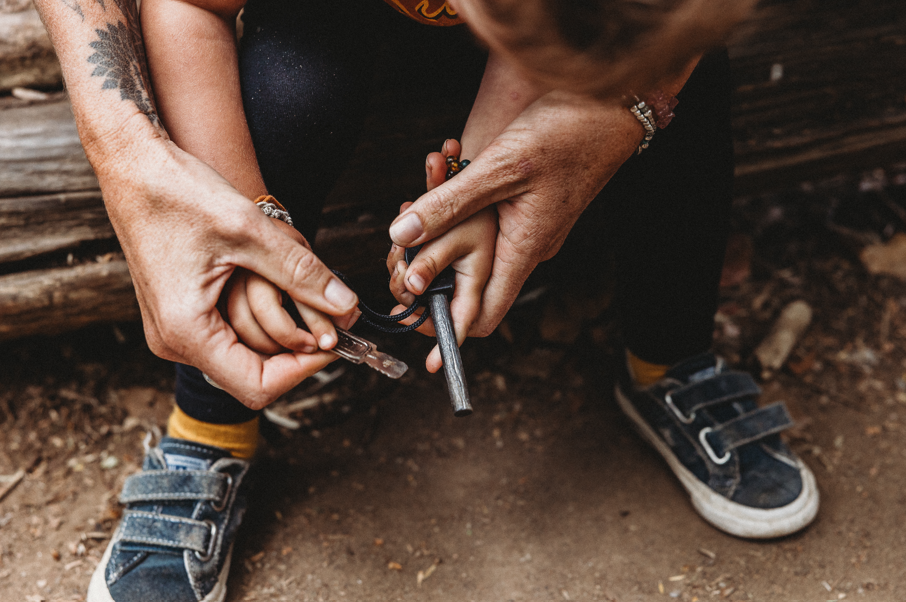
We teach children to swim because we know we can't keep them from the water. So why are we still keeping them from fire?
Picture a child, maybe four or five years old, crouched in the backyard. They've found a box of matches. Nobody taught them what to do next.
This is happening in homes everywhere, every day. And it's happening precisely because we've been too afraid to have the conversation.
There's a saying most of us grew up hearing. If you play with fire, you're going to get burnt. At Wildlings, we'd like to offer a different perspective. If you don't play with fire, you will get burnt.
It sounds provocative. But the statistics are sobering. Globally, fire accounts for over 310,000 deaths annually. Thirty percent of those are people under the age of 20. In Australia, an average of 21 children die by fire every year, most of them in household fires, accidentally lit by curious children under six. Children who were never taught. Children who were simply curious, the way all children are, and had nowhere safe to take that curiosity.
Why avoiding the conversation makes things worse
Fire is one of the most ancient, primal things on earth. Children have been drawn to it for as long as humans have existed. The question was never going to be whether your child would be curious about fire.
The question is whether they'll meet that curiosity with knowledge, or without it.
Think about the way we approach ocean safety in Australia. We don't keep children away from the surf and hope for the best. We teach them to swim. We put surf lifesavers on our beaches. We hand children the skills to be safe in an environment they are going to encounter, because we know keeping them away from it forever was never really an option.
Fire deserves the same respect. Not fear. Respect.
Research into fire safety education tells us something that, once you hear it, feels obvious. Children who understand fire, who have been taught to manage it safely and who know how to respond to it, are significantly less likely to misuse it or be harmed by it. Knowledge is power. When children know better, they do better. And fewer people get hurt.
What it looks like to teach fire well
At Wildlings, fire education begins at around three years of age. Not because we're reckless, but because three is precisely the age children are most at risk. And it's never a single conversation. It's woven through everything we do, repeated and built upon over time, the way any real skill is learned.
Children learn what fire needs to survive. They learn how fast a small flame can become something uncontrollable, something most children have absolutely no instinctive concept of. They learn about the people in their community, the animals in the bush, the homes of their neighbours, and how a single careless moment can change everything for all of them. They learn how to extinguish a fire properly, with water, not sand, which is one of the most dangerous and widespread misconceptions we encounter. They learn what to do if they find a lighter at home, what to do if someone gets burned, how to ask for help.
And we teach them to light fire with a flint and steel, not a lighter. Because there is something profound that happens when a child earns a flame. When they've worked for it, breathed carefully for it, tried and failed and tried again. That child doesn't look at fire and see a thrill. They look at it and feel respect. There's a world of difference between those two things, and it matters.
Something older than any of us
Fire is one of the oldest relationships humanity has ever had. For tens of thousands of years, First Nations communities around the world have tended the land with fire, reading seasons and wind and country with a depth of knowledge that modern science is only beginning to honour. Cool burns and hot burns. Fires that make way for new growth. Fires that protect. Fires that bring a community together at the end of a long day, where stories are told and children fall asleep to the sound of crackling wood and the smell of smoke in their hair.
When we bring children into this conversation, we are not simply teaching them a safety protocol. We are handing them something ancient. We are teaching them that the most powerful things in the world are not to be feared, but to be understood. That knowledge and responsibility are two sides of the same thing. That fire can warm you, feed you, and connect you to every human being who has ever lived, if you treat it with the care it deserves.
Children are more than capable of holding that understanding. They just need someone to trust them with it.
A note for the parents reading this
You don't have to be an expert. You don't need a campfire or a flint and steel or a forest to begin.
Start with a conversation. Ask your child what they already know about fire. You might be surprised by the answer. Then build from there, slowly and calmly, the way you'd talk about anything that matters. What to do if they find matches. What to do if they see a fire start. How to get help. Small conversations, repeated over time, do far more than one frightening talk ever could.
Because the goal was never to keep children away from fire. It was to make sure that when they meet it, and they will, they are ready.