
Why a Sinking Raft is Actually a Win
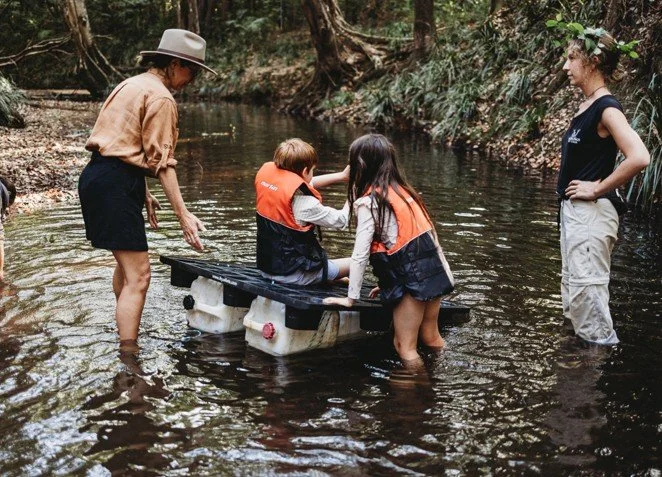
Look, I'm going to tell you something that might sound weird coming from someone who works at a children’s program: I love it when rafts sink.
Every school holidays on the Sunshine Coast, I sit by the creek and watch kids spend ages trying to build a raft. Every time, the rope will slip. The tanks will slide off. And when they finally get it into the water? Straight to the bottom. Sometimes twice.
You know what always happens next? Shrieks with laughter (not from me BTW!), but from the kids as they jump in after it, absolutely drenched and grinning like they'd just won something.
And honestly? They kind of have.
We're Really Scared of Our Kids Failing
It’s an uncomfortable truth: that most of us are terrified of watching our kids struggle. When you see your child frustrated, every instinct screams at you to step in and fix it. To show them the "right" way. To save them from disappointment.
I get it. I feel it too.
But here's what all the research keeps showing (and what I see happen in the creek every week): kids who learn to handle failure actually end up stronger than kids who never get the chance to mess up.
When kids face challenges with support nearby, not helicopter parents swooping in, they learn how to cope with hard stuff. Real coping, not the fake "I'm fine" kind. The deep kind that sticks.
The trick is that the challenge has to be manageable. We're not talking about throwing them in the deep end and walking away. We're talking about letting them figure out the shallow end while you sit close by, ready if things go truly wrong.
And sometimes that shallow end is an actual creek where "failing" means you get wet. Which, let's be honest, is pretty great on a hot Brisbane day.
What Happens at the Creek
So back to our raft builder. I didn't jump in to help. But I also didn't ignore them. I just sat nearby, skipping rocks, being available without hovering.
After the second raft sank, they waded back to shore, totally soaked, dragging their sticks.
"It keeps tipping over," they said.
"Yep," I said. "Why do you reckon that's happening?"
This is where it gets good. They stared at their pile of wooden pallets for a bit, properly thinking, and said, "Maybe they're not tight enough? Like, I need better knots?"
"Could try that," I said.
Next thing you know, they're spending ages working on their knots, checking out what other kids were doing (totally valid learning strategy), testing things out. When they pushed version two into the water and it actually floated for like ten seconds before tipping, they weren't even upset. They were already planning version three.
"I've got it!" they yelled, splashing back in.
That right there is what researchers call self-efficacy. Basically, it's your brain going "Hey, I can actually figure stuff out." And kids build this skill when they have small wins after setbacks.
It's not about the raft. It's about that voice in their head learning to say "I can handle this" instead of "I need an adult."
Oh, and also? Discovering that failing can be genuinely fun when it involves water.
The Brain Stuff (But Simple)
You've probably heard about growth mindset. It's that idea that you get better at things through practice, not because you're "naturally good" at them.
Sounds nice in theory. But watching it happen at the creek is something else.
When a kid's raft sinks, they're at a fork in the road. One way leads to "I'm rubbish at this." The other way leads to "I haven't worked it out yet."
At Wildlings, we're not trying to stop them getting to that fork. We're just trying to be there when they do, helping them pick the path that actually helps them grow.
The brilliant thing about raft building is that nature gives you honest feedback immediately. The raft floats or it doesn't. When it doesn't, you get wet. And getting wet in a Sunshine Coast creek isn't exactly a tragedy. It's a bonus.
I'll say stuff like:
"Oh interesting. What happened there?"
"Even people who build actual boats have to test them. What could you change?"
"Well, at least you're cool now!" (Usually gets a laugh.)
Studies show that when kids see challenges as a chance to get better, not a test of whether they're "smart" or not, they try harder, think more creatively, and actually enjoy the process more.
And there's a lot of joy in raft failures when they come with splash fights.
Why Creeks are Perfect for This
There's something about nature play that makes it ideal for learning to handle failure. At the creek, there's no "correct" way to build a raft. Kids lash pallets together, build elaborate platforms, or go super simple. The rules are loose.
When a kid's standing in the water building a raft that keeps sinking, they're getting feedback from physics and nature. Not from a teacher or a parent. Just from how the world actually works.
The pallet slips apart. The rope loosens. The water does what water does. There's no judgment in it, just information.
It is this kind of self-directed play that builds problem-solving skills and emotional security that shows up in other parts of kids' lives. They learn that setbacks are just data, not personal failures.
Plus, I've noticed kids whose rafts sink immediately often laugh harder than kids whose rafts float first try. There's something freeing about it. The splash, the surprise, getting completely soaked while trying to solve a problem. Failure becomes play instead of something scary.
Here's the important bit: none of this works if kids are on their own. Resilience gets built through relationships, not isolation.
When kids are struggling with their rafts, I'm not ignoring them. I'm allowing space for the struggle. Believing they can work it out. Staying close enough to step in if real distress happens, but far enough back to let them figure it out.
Research shows kids handle adversity better when they have:
Adults who care about them and believe in them
Places where it's safe to take risks and mess up
Grown-ups who can handle their own discomfort when kids struggle
Other kids around who are also trying and failing and trying again
At Wildlings, we're creating spaces where kids can get muddy, use real tools, build stuff, and fail safely. Where failure is just feedback. Where effort matters more than perfection. Where every kid knows adults believe they can figure things out.
And sometimes, where failure means you get to jump in the creek, which is honestly a win.
What You Can Do at Home
I know what you're thinking. "Sure, this works with trained people at a creek, but I'm just trying to get us out the door and everyone's losing it."
Fair. Real life is chaotic. But here are some small things that actually help:
Just wait ten seconds longer When your kid's struggling with something, their shoelaces, a drink bottle, whatever, count to ten before you jump in. Often they sort it in those extra seconds.
Change how you ask Instead of "Let me do that," try "What have you tried?" or "What else could work?" Shifts them from helpless to problem-solving mode.
Show your own failures Talk about when you mess up. "I totally burnt dinner, had the oven too hot, I'll try lower tomorrow." You're showing them everyone fails and it's fine.
Notice the trying, not just the result "You worked really hard on that and tried heaps of different ways" means more than "Good job!" They know you see the effort.
Let them do hard things Cooking (even if messy), real tools for real jobs, navigating the playground themselves. Small bits of independence add up. If you can, find things where "failing" is actually fun, like water play or messy art.
School Holidays That Actually Matter
If you're looking for school holidays stuff to do in Brisbane or the Sunshine Coast, nature programs like ours offer something beyond just "keeping kids busy."
Our school holidays sessions give kids proper time to do this kind of play. Building rafts, using tools, making stuff, getting absolutely covered in mud. All in beautiful forest spots where they can actually be kids.
During school holidays on the Sunshine Coast and around Brisbane, I watch kids go from nervous and careful to confident and willing to try anything. They're not just filling in time. They're learning life skills. Through building rafts that might sink or whittling wonky creations or other projects that don't turn out as they imagined.
The Real Point
Raising resilient kids isn't about protecting them from every disappointment. It's about giving them the tools to handle hard stuff when it comes.
When kids learn that failure is just information, that struggling is part of learning, and that adults believe in them even when things are difficult, something shifts. They don't just bounce back better. They become genuinely confident. The kind of confidence that comes from knowing, really knowing, that they can handle whatever comes.
Every School Holidays at the creek we see it happen. Kids arrive worried about "doing it wrong" and gradually become the ones who'll try anything. Who help other kids through challenges. Who say "I'll work it out" instead of "I can't."
Our raft builders? By the end of sessions, they've usually made rafts that float for a bit before tipping. But more importantly, they've learnt that sinking isn't the end. It's just another chance to splash around, adjust, and have another go. They become kids who cheer when other rafts sink, not because they're mean, but because they know the fun is in the trying.
That's childhood. That's what failure teaches when it's safe to fail. And that's why at Wildlings we keep letting kids get soaked, build rafts that sink, and discover just how capable they actually are.
Especially when failing means you get to play in the creek.
Want to see this in action? Come to one of our school holidays sessions on the Sunshine Coast or around Brisbane. Watch your kid overcome challenges, work out their own solutions, and build real confidence.
Wildlings Forest School runs Nature Adventure Play Programs during school holidays and term time in Brisbane and Sunshine Coast areas. Kids use real tools, build stuff, get muddy, and spend proper time in beautiful natural spots. Where they can actually be kids.